BACK

Designing Holidayalot for the 71% of travelers who find trip planning so stressful

SUMMARY

The process of planning a trip is fragmented across a dozen tools. 67% of travelers get so overwhelmed when they try to plan a trip and they quit finishing the plan. I was one of two product designers who built Holidayalot from the ground up. I owned all user-facing design across the product and built the design system used across the product and admin surfaces. while the second designer worked on the admin side of the product. Holidayalot is a travel companion that meets users at every step of their planning journey.

CONTRIBUTION Product Design, Web design, Design system, Mobile design
YEAR 2025
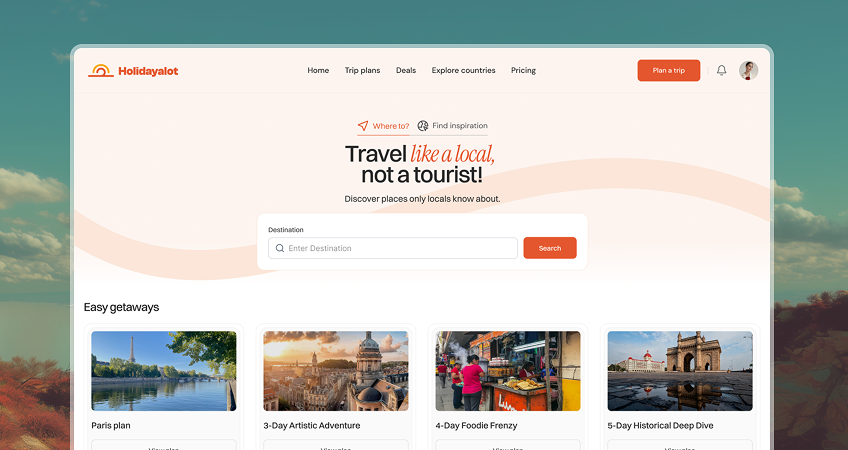
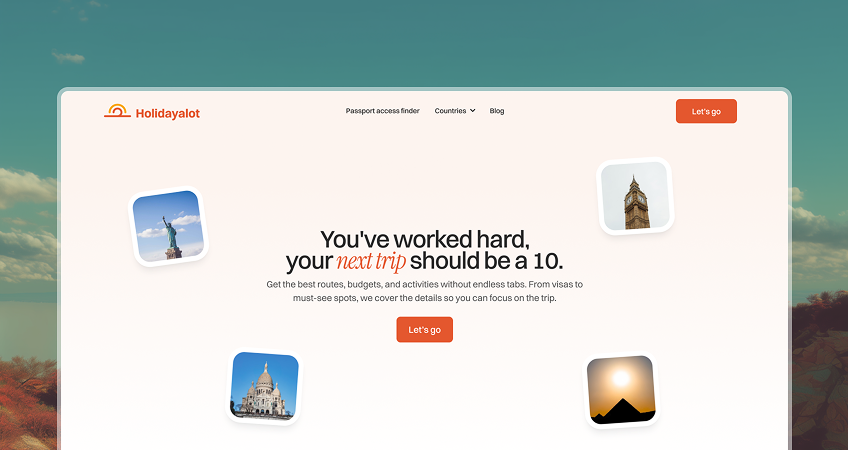
Holidayalot website homepage
THE PROBLEM

Travelers have to figure out their budget using rough estimates and word-of-mouth. They have to decide when to travel without knowing what flights cost around their time off. They have to find a destination by scrolling TikTok and reading blogs. They have to book flights across multiple platforms without knowing which routes are best. They have to plan activities on Google Maps. And throughout all of this, they have to navigate visa requirements and entry rules they often don't know they need until it is too late.

71% STRESSFUL TRAVEL PLANNING
58% FEEL OVERWHELMED
89% ABANDONED BOOKING

67% of travelers report paralysis from information overload when planning a trip. 37% cancel or delay trips entirely because of planning stress. Online travel agencies have the highest cart abandonment rate of any sector: 81%. The result is not just frustration. It is poor decisions: wrong visa assumptions, longer routes, unnecessary layovers, and trips that cost more than they needed to. Holidayalot was designed to close those gaps

Passport access finder feature
PIVOTING

Identifying where the real opportunity

We started with a website that had a passport access finder and a travel blog. It told users which countries their passport could access, what visa types were available, and what travel documents they needed. Useful, but it did not solve the real problem. Providing information does not get people to take a trip.

We moved to a web app. It offered video-based trip inspiration, a trip planner with itinerary tools, curated country guides, and visa information. Better, but still not right. We were building another content and recommendation platform in a market with hundreds of them. Competing with Booking.com, Skyscanner, and every travel blog on the internet for the same users was not a position we could win.

The real opportunity was one level up. If Holidayalot was going to be valuable, it had to fit into the process people already had for planning a trip, not try to replace it.

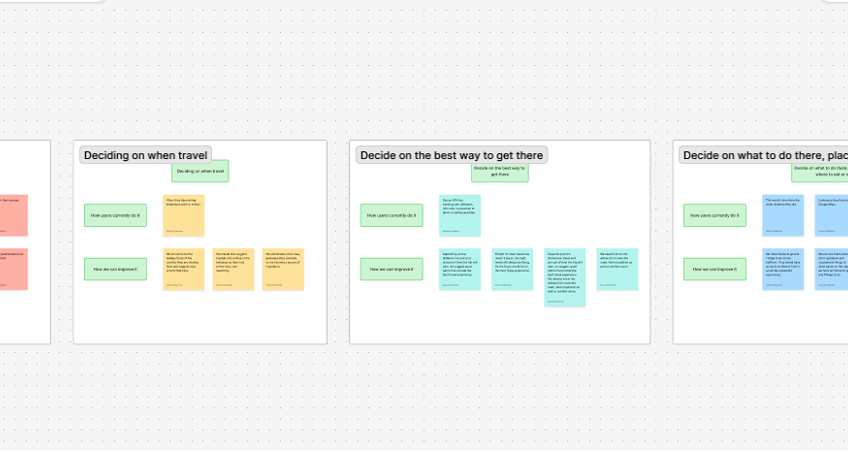
As a team, we mapped the end-to-end journey a traveler takes from "I want to go somewhere" to "I'm on my way." At each stage, we asked: how do people do this today, and where can we add something no existing tool provides?
User journey mapping exercise
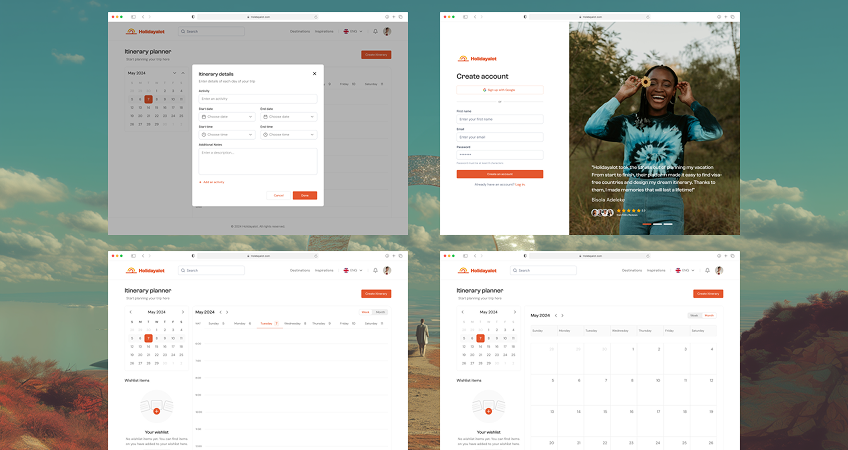
Holidayalot web app
THE SOLUTION

The mapping also clarified something we had not designed for: two distinct traveler types with completely different needs.

The first group knew where they wanted to go. What they lacked was the information to make an actual plan: visa requirements, cost estimates, the best route, what to do when they arrived. They needed a product that filled those gaps without making them start over on a new platform.

The second group had never taken a trip before. They had no destination, no budget, no sense of where to begin. They needed guidance through every step to reach the point where a trip felt possible.

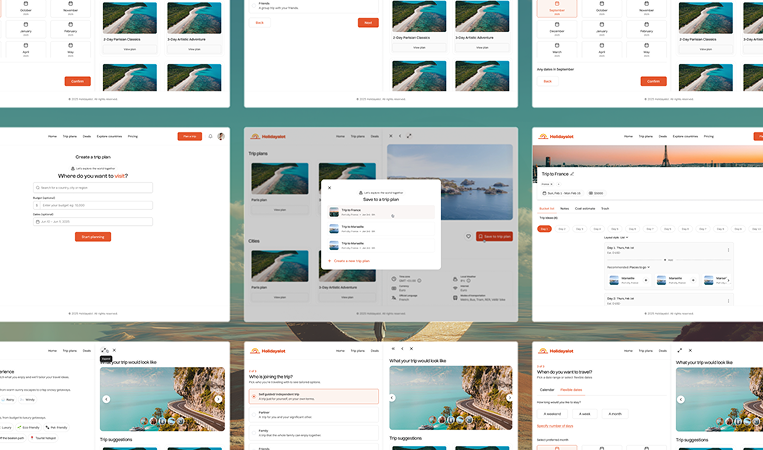
The solution we came up with surfaced personalized recommendations based on location and season, guided first-time travelers through a three-step onboarding form to understand their interests and budget, and brought cost estimates, route options, and travel requirements together in one place.

Holidayalot app screenshots
Holidayalot app screens
THE OUTCOME

Unfortunately, the product was paused.

Metrics I would have measured

The reduction in time and money users spent on poor travel decisions. Whether users were completing trip plans they would previously have abandoned. Whether first-time travelers were getting to a booked trip instead of giving up at the research stage. The 37% of travelers who cancel due to planning stress and the 81% who abandon booking platforms without completing a purchase were the signals we were designing against.